• Skip to primary navigation
  • Skip to main content
  • Skip to primary sidebar

Coaching for Leaders

Leaders Aren't Born, They're Made

Login
  • Plus Membership
  • Academy
  • About
  • Contact
  • Dashboard
  • Login
Episode

775: How to Motivate Younger Employees, with David Yeager

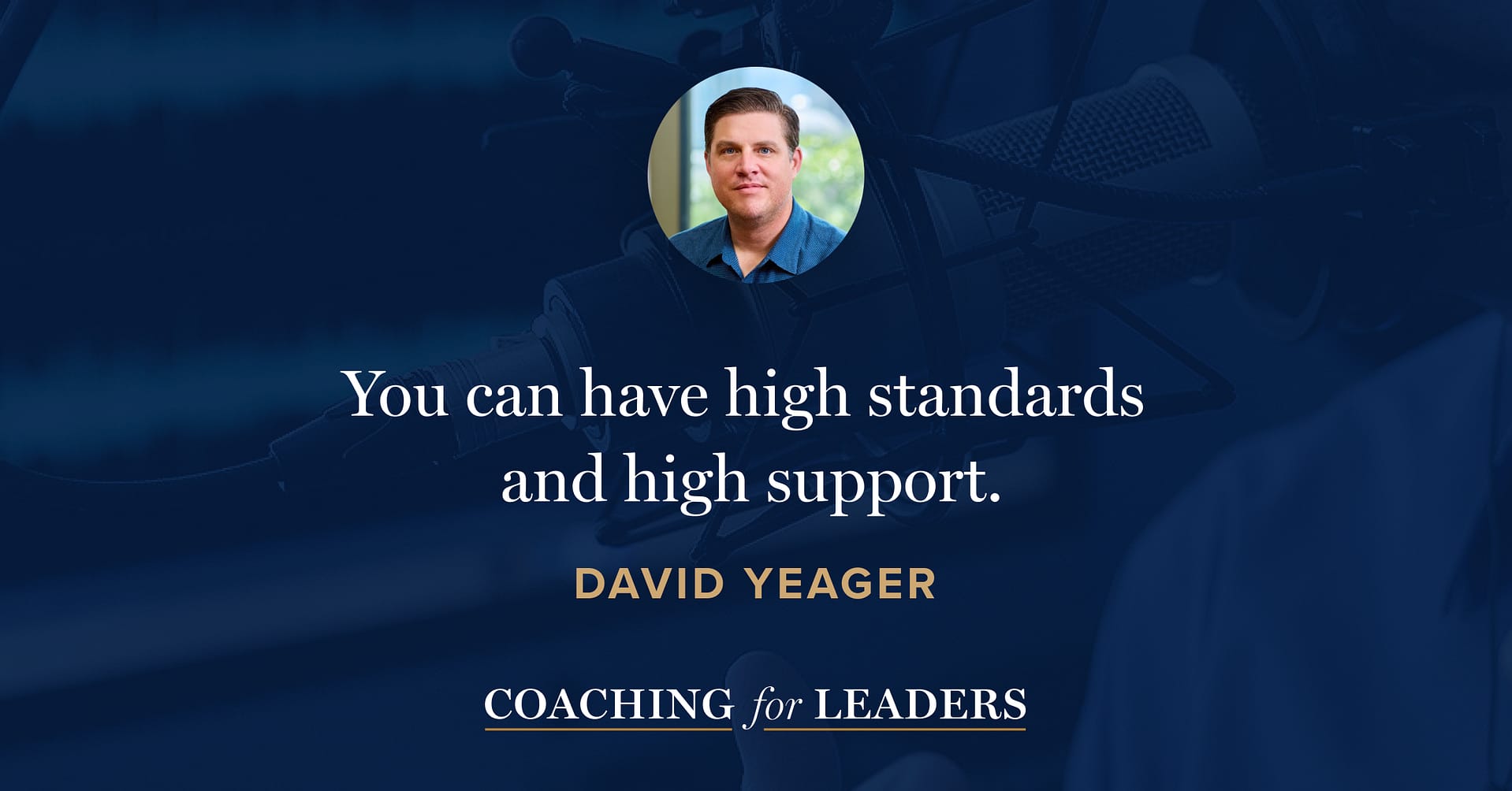
You can have high standards and high support.
https://media.blubrry.com/coaching_for_leaders/content.blubrry.com/coaching_for_leaders/CFL775.mp3

Podcast: Download

Follow:
Apple PodcastsYouTube PodcastsSpotifyOvercastPocketcasts

David Yeager: 10 to 25

David Yeager is a professor of psychology at the University of Texas at Austin and the cofounder of the Texas Behavioral Science and Policy Institute. He is best known for his research conducted with Carol Dweck, Angela Duckworth, and Greg Walton on short but powerful interventions that influence adolescent behaviors such as motivation, engagement, healthy eating, bullying, stress, mental health, and more. He is the author of 10 to 25: The Science of Motivating Young People (Amazon, Bookshop)*.

Older generations have been complaining about younger generations for all of recorded history. Today is no different, and I often hear how leaders are struggling with motivating their younger employees. In this conversation, David and I explore the most recent research and practice for what actually works.

Key Points

  • Older generations have been complaining about younger generations for all of recorded history. Often, our complaints are the result of our own past experiences.
  • Many leaders experience the mentor’s dilemma: being nice and putting up with poor performance, or being critical and demanding higher performance.
  • Status and respect for a young person are as critical as food and sleep to a baby. When satisfied, they can open up much better motivation and behavior.
  • The mentor mindset embraces both high standards and high support for the young person you wish to motivate. Because this is a mindset, you can absolutely get better at it.
  • When giving feedback to a young person, acknowledge the high standard you are setting and also tell the young person that you believe they can meet that standard.
  • Young people have often experienced a lot of “enforcing” behavior from parents, teachers, and coaches. They assume this in the workplace if you don’t make a point to say otherwise.

Resources Mentioned

  • 10 to 25: The Science of Motivating Young People by David Yeager (Amazon, Bookshop)*
  • The Power of Mindset (Masterclass)

Interview Notes

Download my interview notes in PDF format (free membership required).

Related Episodes

  • How to Challenge Directly and Care Personally, with Kim Scott (episode 302)
  • How to Reduce Drama With Kids, with Tina Payne Bryson (episode 310)
  • How to Solve the Toughest Problems, with Wendy Smith (episode 612)

Discover More

Activate your free membership for full access to the entire library of interviews since 2011, searchable by topic. To accelerate your learning, uncover more inside Coaching for Leaders Plus.
How to Motivate Younger Employees, with David Yeager

Download

Dave Stachowiak [00:00:00]:
Older generations have been complaining about younger generations for all of recorded history. Today is no different, and I often hear leaders struggling with motivating their younger employees. In this episode, the most recent research and practice for what actually works. This is Coaching for Leaders, episode 775.

Dave Stachowiak [00:00:022]:
Production Credit: Produced by Innovate Learning, Maximizing Human Potential.

Dave Stachowiak [00:00:30]:
Greetings to you from Orange County, California. This is Coaching for Leaders, and I’m your host, Dave Stachowiak. Leaders aren’t born, they’re made, and this weekly show helps leaders thrive at key inflection points.

Dave Stachowiak [00:00:44]:
One inflection point that is true for almost every leader is not just the performance that they are being mindful of in the organization, but how do you mentor others to be able to perform well? To be able to be great contributors in the organization? And a constant question that I get is, how do I do that better for the youngest employees, the folks maybe coming into their career, or in their first few years of their career? And how do I do that effectively? Today, an expert who’s going to help us to really be more effective at being able to motivate the young people in our organization. But by the way, the principles, as probably won’t be a surprise, I think are broadly applicable to so many of us. I’m pleased to introduce David Yeager. He is a professor of psychology at the University of Texas at Austin, and the co-founder of the Texas Behavioral Science and Policy Institute. He is best known for his research conducted with Carol Dweck, Angela Duckworth, and Greg Walton on short but powerful interventions that influence adolescent behaviors such as motivation, engagement, healthy eating, bullying, stress, mental health, and more. He’s the author of 10 to 25: The Science of Motivating Young People. David, what a pleasure to have you on.

David Yeager [00:01:57]:
Yeah, thanks for having me.

Dave Stachowiak [00:01:58]:
There’s a line in the book, a phrase rather, you repeat a bunch of times. You often put it in quotes, and it’s one that we have heard so many times from so many different people. And the phrase is, “Kids these days,” of often starting with a conversation of, a complaint about this generation just doesn’t show up with the same level of motivation, intention, responsibility that I did in my generation. And You have been in the research on this more so than probably anyone else I’ve talked to. Are kids these days really that different than prior generations, or is this just one of those, like, human things that we just like to complain about the generation that’s behind us?

David Yeager [00:02:44]:
Yeah, that’s a great question. First, I would say that it’s not coming from nowhere. So there’s a reason why so many managers are saying young people are different. And yet there’s also a whole narrative that is not quite accurate. So let me just challenge a little bit of the conventional wisdom, and then describe what the science is saying is legitimately different.

Dave Stachowiak [00:03:07]:
Please.

David Yeager [00:03:07]:
So in general, when adults complain about young people, it’s often more about them and their— how they have developed and grown up, and less about young people. And people don’t like hearing that, but just to convince you of that, there are records of older generations complaining about the moral decline of the next generation. They don’t work hard, they don’t have self-control, they’re impulsive or whatever, for as long as human beings have been writing things down. So Aristotle complained about this. It’s like in Shakespeare, in Freud, right? And what often seems like a decay or decline in the next generation, is really the fact that we are older than we were earlier. And so most adults look back on their choices they made when they were young, as kind of youthful indiscretions or kind of fun ways of gaming the system. And then when young people do the exact same behaviors, then we think, oh, their society’s going to hell in a handbasket. And there’s a great psychologist at Harvard who is named Dan Gilbert, and his graduate student, they published a paper on this, and they found that in national surveys, every single generation for as long as we have been measuring this kind of thing for about 70 years in the US, every generation thinks the next generation is worse off.

David Yeager [00:04:26]:
Okay, so why is that the case? You know, a lot of times what’s happening is, if you’re a leader and a manager, then you have succeeded in whatever organization or role you’ve been a part of. But the people you’re supervising are made up of people who might succeed and be promoted and who might not. And so on average, the majority of people are gonna be people who have different goals, different skills, different ambitions, different desires. And so you’re gonna see a lot of things that are different from how you would’ve approached the same situation, simply by virtue of the fact that these are different kinds of people. So one way to drive this home is I often say, you know, professors in college complain about the new crop of freshmen all the time. They’re like, these kids don’t work, or they don’t love reading long books anymore. And it’s like, look, if you’re a professor, you’re the kind of person who finished school and then never left school. That’s how much you love school.

David Yeager [00:05:20]:
You’re like, give me more school, and then I’m going to get a job and stay in school forever.

Dave Stachowiak [00:05:24]:
Yeah, right.

David Yeager [00:05:25]:
And only 1% of your students are going to do that. So yeah, 99% of the students do things that are differently than how you would have done them, but that’s because 99% are different kinds of students than you were. So I think that the first answer is that, a lot of what we complain about is a kind of perception problem, and less of it is a reality of the decline of the next generation. Okay, but are there real differences? There are real differences, because young people are attuned to how to get ahead and be successful in their culture. And, just to show that, like, anytime adults want to understand what trends are popular, right, they ask young people, right? Whether it’s music or fashion, right, or just, or TikTok or whatever it is, young people are on the cutting edge, and that’s kind of their job in any society. And so they are, in general, attuned to what counts for success in a given culture. And when the real labor market and economy changes, which it does increasingly every few years— and it used to be every 30, 40, 50 years— then young people are the first to try out this new economy and this new way of getting ahead.

David Yeager [00:06:35]:
And adults in general think of that as kind of frivolous, but like, who are we to— I mean, like, being a podcaster was a weird thing 20 years ago when Steve Jobs made up that word to sell iPods.

Dave Stachowiak [00:06:47]:
Oh yeah, yeah.

David Yeager [00:06:48]:
But now, like, just the Golden Globes on Sunday, right? It’s like there’s a category for podcasts, right? And it makes tons of money. So I think that yes, young people are attuned to the new opportunities, and new new ways of being, ways of being successful that are now available. And, once that becomes apparent to them, the toothpaste is out of the tube. It’s hard to put it back in. But that doesn’t mean they’re shortsighted or frivolous. It means they’re like, attuned to what the incentives are in their, in their culture.

Dave Stachowiak [00:07:18]:
You highlight something in your book that is a reality, I think, for a lot of managers, which is the mentor’s dilemma. Tell me about that, and what is it that’s a dilemma for us when we’re trying to motivate young people?

David Yeager [00:07:32]:
Yeah, I mean, I think that there, there’s just— there are a lot of dilemmas that really kind of get in the way. But one of the big ones that I write about in my book is, the dilemma that it’s very hard to simultaneously criticize somebody and motivate them. What I mean by that is that, you know, if I’m an expert in my field— say I was the top salesperson at my organization, and now I’m a sales manager— I know a lot about how to sell. And a novice knows less than me. So inevitably, if I’m doing my job, then I’m going to be providing critical feedback on how those novices can get better. But the issue is that, if I point out a bunch of ways in which somebody is flawed and problematic, then they get mad at me and they’re like, um, offended basically, and you push them away. But if you withhold your criticism, then are you just endorsing mediocrity, or are you failing in your obligation to teach someone how to do it right. So it’s a dilemma because it doesn’t feel like there’s a good choice.

David Yeager [00:08:32]:
Either I can be really tough but, but demotivate somebody, or I could be very friendly and caring but fail to educate them. And what I argue is that those are not the only two options. You can point out what people need to work on, you can be tough and demanding, but you can also be excessively supportive and offer to work with them to try to improve. And that’s something that we— that’s a style of high demand, high support that we found again and again is optimal for motivation, but also for growth and development.

Dave Stachowiak [00:09:02]:
You write, our society tends to think that there are only two ways to interact with young people: tough or soft, mean or nice, authoritarian or permissive. We don’t realize that you can have a bit of both. You can have high standards and high support. I was thinking about that, and one of the stories you tell in your book is, you were by the way, a middle school teacher earlier in your career. And while you were writing this book, your daughter, who was in 7th grade at the time, asks you out of the blue, what kind of middle school teacher were you? And I’m wondering if you could share what she said, and how she framed that question, because I think it so beautifully captures some of the framework and the message of what you’re teaching.

David Yeager [00:09:43]:
Yeah, so I think that I was looking at ways to resolve this mentor’s dilemma, and we had conducted some research on basically a framing that we, we call “wise feedback”. And the— this is with Jeff Cohen, and others who I collaborated with. And we found that accompanying critical feedback with a very clear and transparent statement that you are being tough because you believe in their potential, but you’re working with them to improve and meet that potential—. So it’s an appeal to high standards plus an invocation of your support— that, that motivated people to take the critical feedback. And so I— we took that work and we, we tried to describe general leadership styles that apply to managers, teachers, coaches, parents, etc., where you’re either too high on demand and too low on support, you’re high on both demand and support, um, which is the best one, or you’re low on demand, high on support. Okay. And I’ll— so, and we’ll get to that, I assume, but it was funny, like while I was writing the book, I was trying to characterize these three, and I didn’t quite know how to encapsulate them. And then my daughter came into my office and was like, Dad, what are you doing? I’m like, I’m writing my book.

David Yeager [00:11:01]:
And she’s like, are you talking about your time as a middle school teacher? I was like, yeah, a little bit. And she was like, what kind of teacher were you? And I was like, what do you mean? And I wanted to hear how she described it. And she goes, well, were you one of those teachers who just like, yells at everybody, and is mad at them for not doing their work, and then thinks they can just shame everybody into it? And then they hate— and all the students hate that teacher, and they only do the work because they’re afraid of getting punished? And I was like, no, what’s the other option? She’s like, were you one of those teachers where it’s like super easy, and students can do whatever they want in the class, and they kind of like going to it because there’s no thinking, but really no one respects the teacher, or takes them seriously because they walk all over them. And I was like, no, what’s the third option? She’s like, were you one of those teachers where even if you hate the subject matter, you start liking it because the teacher believes in you and it’s hard, but then you learn a lot, and you look back on it, and you’re like, wow, I’m really glad I did that. And then you’re really proud of yourself. So then you respect that teacher.

David Yeager [00:11:59]:
And I was like, I hope so. But she kind of perfectly encapsulated those three styles that I described, which is like all standards, no support, no standards, high support, or the combo of high standards and high support. And it— she really just nailed it in terms of her descriptions.

Dave Stachowiak [00:12:16]:
Yeah, it really speaks to something that’s so key in this, and you write on this. Science tells us that when young people are being critiqued by an authority figure, they’re asking themselves a deeper, more existential question. Does this person who has power over my life think I’m incompetent? Before they can hear the criticism for what it is, helpful advice on how to better meet their goals, they have to feel safe. And I was really struck by that because it’s not only just today. This is really part of like, our evolutionary history. This is a really key thing, I think, for us to understand as managers, as leaders, as parents.

David Yeager [00:12:53]:
Yeah, I mean, I think, look, there’s been a lot written about psychological safety, and you can see it all over the Harvard Business Review, etcetera. And it’s not wrong, but I think that the, the simple idea is that if, if you want employees or children or students or players in a sports team to go out and do awesome stuff. Stuff that’s impressive, that’s above and beyond, etcetera, they need to feel safe from the perspective of. They’re not going to be judged, blamed, shamed, punished if things go wrong. Because basically, if you take a risk, and then you’ll be punished for that risk, then people are less likely to do it. Okay, so that part of psychological safety, that’s all legitimate. The way it’s been often distorted is people say, oh well, you can’t ever feel uncomfortable or stressed or distressed, because if you do, then you’re not feeling safe. And if you’re not feeling safe, then you won’t work hard. And then that, in especially, I think, in the last decade or half decade, has led to some philosophies that say, you know, never do things that are hard, never push people to their limits, etc., because then they don’t feel safe.

David Yeager [00:14:04]:
But the, the basis of all that research on psychological safety is actually attachment theory, which is— and I’m a developmental psychologist, this is in my field, where if you want a baby who goes and learns how to crawl and eventually learns how to walk, they, they— you see this all the time— babies, before they go crawl in a dangerous place, will turn around and look for their mom to see if their mom is going to support them, or catch them, or be there for them if they face danger. And if they decide that the mom would be there, and that they can trust in that support, then they go to the dangerous place. So it’s actually, weirdly, safety is like a precursor to danger in infancy. And that is how humans learn. They go explore the world around them, in part because they feel that emotional safety. Similarly, at the workplace, safety doesn’t mean never having discomfort. It means like, basically, I’m not going to be rejected and discarded as a person if I have temporary failure. And, and instead, I can count on this, this manager or leader or powerful person being in my corner, even if things are hard and imperfect.

David Yeager [00:15:13]:
And if I believe that, then now I’m willing to go take a risk. So where does that come into what I’ve been talking about? Well, the— this leadership style of high standards, high support, that is a way of creating a sense of safety for employees and children, students, etc. And so the supportiveness creates an experience in which they say, okay, this person’s there for me, great. But then the demand or challenge means, okay, they also expect me to go out and do cool stuff as a result of that support. And so I think that, that’s kind of the balance here is when you do high standards, high support, it’s not just a lot of work for the manager. It’s like a way of emboldening, and inspiring, and empowering your team so that they do more and you’re overall more productive.

Dave Stachowiak [00:16:03]:
It’s very much a both/and, right? Of both of these together at the same time. And I think a lot of us, because of our upbringing, because of our personality, whatever, we tend to, at least I’ve noticed in my own life, and with working with leaders, is we often tend to like veer to one of these or the other. We tend to be more that, that enforcer mindset, or we tend to be more the protector, the person who’s kind of like that teacher you described, who’s, you know, everyone sort of like just feels comfortable, and likes them, but, you know, it doesn’t necessarily learn a lot. The invitation here, I think, is, hey, whichever side you’re not tending to do as much of, there really is the importance of doing both.

David Yeager [00:16:48]:
Yeah, I think that, you know, you put those labels on it that I write about in the book, and I think, I think they’re important, that- this, this idea of all standards, no support, where you’re tough, demanding, etc., but you kind of leave people to do it on their own, that’s what I call the enforcer mindset. And there, your main goal is to enforce a standard. Some people meet it, other people don’t. If they don’t, there’s harsh and swift consequences. If they do, then maybe there’s over-the-top extravagant rewards. But only a minority of people are going to meet that high standard, and the rest are going to feel inadequate, shamed, blamed, judged, etc. And so that’s a version of, you know, ruling with fear, authoritarianism, etc. And one alternative to that is what’s been called the protector mindset, and that’s low standards, high support.

David Yeager [00:17:36]:
And that’s the person who says, look, my goal here is really to let you know I care for you, and I’m going to do that no matter what the cost, even if it means I expect less of you in terms of your work. And so in the protector, people see their goal is to protect you from distress, to reduce crying, to reduce fear, and basically remove any obstacle or challenge from the- somebody’s way. And, you know, both of those come from a good place, in my opinion. So the enforcer comes from the, the belief that we should expect more of people. But if you, if you really believe, starting out from this, the- what we talked about at the beginning of this conversation. What do we believe about young people? Are they incompetent or not? Are these kids these days ruined or not? If you believe that they’re ruined and incompetent, enforcer makes a lot of sense, actually, because why would you ever trust a young person who is part of this exponential moral decay of the current generation, right? It doesn’t make sense. Similarly, protectors believe that young people are not capable of very much, and that’s why they don’t expect very much at all, right? If you think this generation is stressed out, they’ve had toxic trauma, they’re feeble, their brains are addicted to their phones, etc., then you don’t expect anything of them.

David Yeager [00:18:50]:
But the mentor comes from a different place, and it’s the idea that, look, young people are capable of incredible stuff if they’re given the right support, and sometimes that support needs to come from me. And when that happens, then they can be independent, and autonomous and do work without supervision, and do the right thing, and not need constant shame and blame and judgment and threats. And that last one, that meant— which we call the mentor mindset— that’s high standards and high support. And that ends up communicating respect to young people, because you’re saying, hey, I’m taking you seriously, but also I’m respecting you by saying you’re worth my time, of, you know, the investment of my effort and time, and I’m going to walk the journey with you as you meet this higher standard.

Dave Stachowiak [00:19:33]:
You said the phrase a couple of times in this conversation of “wise feedback”, that that’s something that if we can aspire to, work better at getting to that place, that that helps us to do both of these well. What does wise feedback sound like, and what is it that makes it wise, that’s different than what often we’re doing in organizations?

David Yeager [00:19:54]:
Yeah, so the— and as I mentioned, the wise feedback was this original research we did on how to resolve the mentor’s dilemma. And it involves two things, is when you provide critical feedback, saying first, this is coming from my high standards, which implies it’s not coming from bias, because that’s the alternative explanation in the mind of the recipient, right? They think, oh, you’re critiquing me because you’re mean, you don’t like me, you’re trying to make me feel like a nothing, you’re coming down on me. That’s, that’s listener’s default explanation. So you’re giving them an alternative explanation, which is, no, I just have high standards. And that’s it. And then the second part is, I’m holding you to the standard because I believe you’re capable of meeting it, right? And that’s important because the alternative is, I’m holding you to the standard because I’m trying to keep you out, or I like punishing you, or I want you to be outed as someone who’s no good, right? Or it’s a power play, or I enjoy exerting power on you, right? Those are all plausible alternative explanations in the mind of the recipient of feedback. So what I found is that, you kind of have to be transparent, and often like way more transparent than you think you need to be, when you’re providing critical feedback across this divide, from someone who has more power and authority to someone who has less. So wise feedback was kind of the original experiment that led us to think of this mentor mindset, and that basically, wise feedback shows us that the solution to the mentor’s dilemma is the mentor mindset.

David Yeager [00:21:22]:
Right, the high standards, high support. But in my book, I go— I kind of build on that. It’s a very simple example to talk about more general approaches and principles for communication so that you convey standards and support in a way that communicates respect.

Dave Stachowiak [00:21:39]:
The thing that struck me so immediately when thinking about this, and reflecting on, not only my own actions, but watching the interactions many of our clients and listeners have is that, oftentimes, we are thinking those things in our minds. We are thinking about the high standards we have, and we’re also thinking, I know this person can meet it. And then we don’t necessarily say that out loud. And I think, like, when I reflect on my own behavior, and when I see leaders stumbling with this, that’s the part I think a lot of us are missing, is that we just sort of assume that young people in particular know that. Well, the reason I’m giving you this feedback, the reason I’m pushing you on this is because I do have high standards. And also, I believe in you, and I believe that you can do it. And yet, when we don’t say it out loud, they hear something really different oftentimes, because they just assume, wow, this person is just being mean. And I’ve made that assumption a million times in my own, my own career as well, too. And the invitation, like, so strongly for me is, say that out loud, be really clear on what your intentions are.

David Yeager [00:22:45]:
Yeah, I think that whenever we develop trainings for managers and teachers and others, we say, look, it’s not hard to convince you that if you communicate better and more thoughtfully, that you can be more motivating. Most people believe that. The problem is a lot of people think they shouldn’t have to communicate differently. They think, I wear my intentions on my sleeve, it should be obvious why I’m communicating with you in this way. And if you don’t presume that I’m doing things for your best interest, or that I’m doing things with integrity, then that’s your problem. And it means you’re either distrusting, or you’re entitled, or you’re a wimp, or whatever.

David Yeager [00:23:28]:
It’s like a flaw in the listener if they get offended by my criticism as your manager, right? And so, then it feeds into this whole narrative of Gen Z is the worst, they’re a bunch of wimps, they, they don’t care about anything, they’re selfish, they’re short-sighted, etc. Okay? And so when I train people, I’m like, look, think about it from the perspective of the recipient of this information. If all they have ever known is enforcer mindsets, if every time they didn’t have a homework assignment turned in in school growing up, the teacher said, “I told you to do this, I told you it was important, and then you didn’t do it. And the fact that you didn’t do it means you don’t care and you’re not thinking about your future. And if you don’t care, and not thinking about your future, then I’m not gonna go outta my way to help you. And so you just get an F. And you’re welcome to go do your work and show me you care, but if you don’t, then I’m not talking to you.” Okay, that’s like 60% of all interactions young people have with teachers, according to our data.

David Yeager [00:24:26]:
And that happened from age like 5 to 18. And then they, maybe had the same interactions in college. So you’re really talking, you know, 5 to 22. Okay, so it’s been like 17 years of their life, anytime they interacted with an authority figure with any kind of confusion or mistake or something they screwed up, it was Enforcer. And now they show up at a workplace where they have a highly effective, maybe busy manager who primarily sees their job as having team productivity, not managing feelings. And that manager assumes that every single employee will view their behavior in the most charitable possible light. That when I’m coming down on you for your presentation to our client not being good enough, of course I’m here, I’m in your corner, I’m on your side. Why would you assume anything different? My argument is, why would they ever assume that their manager is doing mentor mindset? Mm-hmm.

David Yeager [00:25:17]:
It’s like preposterous given what they’ve experienced. And so, considering that, what are you doing as a manager to make it clear that you are different from every single authority figure that person has ever interacted with for the most part in their entire lives? And if you’re not transparent about that, then of course you should assume they will view you and your behavior in light of how they’ve typically been treated in the past. And when I say that, they’re like, oh yeah, you’re right, eventually. And they’re like, well, what do I say differently? And I’m like, it doesn’t have to be that hard. You have to say something like, look, I— we hired you for a reason. We think you’re good at your job, and we think we can grow into this job, and we’re committed to you, and we want you here, and we want you growing, and we want you to be a leader and a top performer. Because of that, I care about you too much to let you not do a great job on this task. So I’m going to be relentless about the details, but I’m also going to be here to work with you until you do great work.

David Yeager [00:26:10]:
Now, given that, ‘Let’s dig in and look at your outline on your presentation,’ or whatever the task is, right? If you say that kind of stuff, then now all of a sudden it’s like you’ve created a bubble. This is now a new environment, a new set of expectations. And if you do it, you’re not like catering to a wimpy generation. You’re just responding to the reality of what young people have come to expect through no fault of their own, but through how they were socialized in most institutions of their lives up until that point.

Dave Stachowiak [00:26:40]:
You write on this, status and respect are to a young person what food and sleep are to a baby, core needs, that when satisfied can unlock better motivation and behavior. And that strikes me as such a profound thing that again, I think like intellectually, if we stop and think about it, a lot of us sort of recognize that, thinking back to that stage of our lives, and yet, to your point you just made, we’re not saying that and acknowledging that out loud. And so if we’re not, the assumption from the other party, the younger person, is like, oh, I don’t have the status and respect. And that’s so important at this stage.

David Yeager [00:27:19]:
Yeah, I mean, I think that where that’s coming from is this idea that, you know, if I’m a parent of an infant and the infant’s crying, okay, I see distress, what do I do? I don’t sit there and yell at them and say, How come you need food so much? And why do you need another nap, you idiot baby? That’d be ridiculous, right? You instead go through a checklist. You’re like, all right, number 1, why is the baby crying? Do they have a dirty diaper? Yes or no? Okay, no. Do they need to be swaddled, right, and wrapped up tight? Okay, yes or no. Are they hungry? And if they’re not hungry, maybe they’re tired, right? There’s like 4 things. And if you know those 4 things and you’re pretty good at them, you can get most babies to calm down unless they’re colicky, right? And even colicky babies grow out of that. So like parenting infants, I mean, it, you know, everyone remembers if you had an infant how terrifying it is initially.

Dave Stachowiak [00:28:11]:
Yeah.

David Yeager [00:28:11]:
Pretty soon you get good at it, cuz there’s like 4 things to do right now. Imagine you have like a sassy 12-year-old or 18-year-old, okay?

David Yeager [00:28:21]:
Or a devastated crying teenager, right? Or whatever it is. So what is your checklist? Well, first of all, teenagers are probably hungry and tired. So like, they’ve— and frankly, a lot of times they do have to pee. And so they probably, you know, it’s not crazy actually to offer them food or a nap or go to the bathroom. But after those things are addressed, it’s like, what is their issue? And often, it’s some kind of threat to status and respect that they can’t manage, whether it’s a rumor about them that is uncontrollable, it’s out of the bag, some fear that they’re left out, that everyone’s doing something without them, some idea that their reputation is at risk, right? Their peer group is fracturing, their teacher is coming down on them, or publicly humiliating them, right? All those things come across to adults as frivolous and short-sighted, but to young people, they’re as vital as sleep, a swaddle, a diaper, and a bottle are to an infant. And, and I say that metaphorically, but I also mean literally. Like, kids will starve themselves for the sake of status and respect, whether it’s eating disorders or just playing Call of Duty all night.

David Yeager [00:29:36]:
And they won’t go to the bathroom, and they won’t sleep, and they, they literally won’t do bodily needs for the sake of status and respect. And there are disordered versions of that— Call of Duty and Halo— But there’s non-disordered versions, like being an Olympic athlete. Like, why do you think those gymnasts wake up at 4 o’clock in the morning, and practice till midnight? You know, it’s to be legends. And we, we laud it when it’s on NBC in the Olympics, and then we, we like look down on it when it’s anything else. And so, I think the reality is, a lot of seemingly frustrating teenage behavior is actually the result of some conflict in their pursuit of status and respect. And once we think of it that way, we’re like, huh, maybe I can figure out what that threat is, or what that need is, and if we could satisfy it, then their behavior would change. And so what I argue is stop just giving up on the whole generation or young people in general and saying teenagers are the worst, right? It’s like this attitude of, lock them in a closet till they’re 30, but instead be like, all right, let’s troubleshoot this the way we would an infant, but just there’s a different set of needs that are, that are at issue.

David Yeager [00:30:41]:
And how about older? What I argue in the book is that, a lot of people are in a state of adolescence even if they’re not in terms of chronological age an adolescent. And they’re in that state anytime their status and threat— or their status and respect comes under threat. So, for example, I talked to this one manager who’s the general counsel of a Fortune 100 company, and he read the book, and he was like, this is great because it helps me talk to my junior lawyers who are 23 to 28. Right? Fresh out of law school, top-notch people, but they don’t like getting critical feedback on their briefs from the general counsel. So he’s like, he read it first from the lens of, he’s the mentor and needs to use mentor mindset. At the same time, he was approaching retirement, and he was going to be a middle school teacher. And I was like, okay, now imagine you’re 65, and you’re teaching your first day of 7th grade civics. And the principal comes in the back and starts quietly making notes on what you’re doing and all of the mistakes you’re making in the class, how are you going to feel? And he’s like, I’m going to feel like one of those teenagers, or one of those junior lawyers who’s doubting their abilities.

David Yeager [00:31:49]:
So like, even with a senior person who’s been at the top of his game, once he changes roles, he’s going to also be in this predicament of adolescence. And so I think the book applies across the age ranges, and 10 to 25 gives us a lens for understanding it. But it has broad applicability.

Dave Stachowiak [00:32:07]:
Agreed. As I was reading through this, I had an interaction this week with someone well outside this age range, older, and yet I realized I was missing a big opportunity on the status and respect piece of it, that totally changed how I approached my communication. I think it’s like such an essential read for all of us. And as you point out, every one of us, whether it is a child, a colleague, an employee, has folks in this age range in our lives. And so being able to understand the research and what works and what doesn’t, so critical. There’s so much more in the book. One last question for you, David. As you, as you think about just the last few years bringing this book out, doing the research, I’m curious, like, when you think about motivating young people, what have you yourself changed your mind on?

David Yeager [00:32:53]:
Yeah, that’s great. I mean, I think probably the biggest thing for me is, often as a leader or a manager or a parent, you’re often told that if you get something wrong, you’ve screwed it up and it’s never going to get better, and you’ve ruined a relationship, and it’s toxic. And I think what, what I learned reporting for the book is that you can get do-overs. You know, it’s not one and done. And, and, you know, we’re, we’re told that it’s one and done. When you look at all this work on early childhood and toxic stress and babies and stuff, it’s like, oh, this baby had this traumatic exposure, and now it’s ruined for life. And I don’t think relationships are exactly like that. I mean, I definitely think you can, you can definitely screw up in an unforgettable way, if you publicly humiliate somebody, right? They’re never gonna forget it.

David Yeager [00:33:42]:
At the same time, as a parent, you know, if you lose your mind temporarily, you can go up to the, your kid later and say, all right, I didn’t handle that the right way. I, I still need you to do this thing because it’s very important. I’m not lowering the standard, but I should have been more curious why it’s hard for you to get it done. So would you mind having a conversation with me about, what I can do differently to support you so we can do this? And often people will remember, especially kids, will remember the do-over more than the initial conversation. And that— I, I learned that from Lorena Seidel, this great parenting coach I interview in my book. And I think it applies not just in parenting, but in managing and lots of other relationships as well.

Dave Stachowiak [00:34:22]:
David Yeager is the author of 10 to 25: The Science of Motivating Young People. David, thank you so much for your work, and sharing it with us.

David Yeager [00:34:29]:
Yeah, sure. And just a quick plug for our masterclass. There’s a website called masterclass.com, and Carol Dweck and I have a shorter version of our— of my book. If you don’t want to listen to 14 hours of me reading my book on Audible, then, you know, you can check out the masterclass as well.

Dave Stachowiak [00:34:46]:
Awesome. We’ll link to it. Thanks so much.

David Yeager [00:34:48]:
Thanks a lot, Dave.

Dave Stachowiak [00:34:55]:
If this conversation was helpful to you, 3 other episodes that will also support you. One of them is episode 302: How to Challenge Directly and Care Personally. Kim Scott was my guest on that episode, the founder of Radical Candor and author of the book by the same name. A fabulous model, and one that I heard echoed in this conversation with David, of challenging directly and also caring personally. I think Kim’s got a wonderful perspective on that. I know many of you have followed her work as well. Episode 302, if you’ve not gotten into that model before, that’ll help us support our conversation today. Also recommended Episode 310: How to Reduce Drama with Kids.

Dave Stachowiak [00:35:35]:
Tina Payne Bryson was my guest on that episode, a little bit different than a typical episode we do, but I’m thinking about it because of, of course, the topic today. And I did take that episode, just to take a step back and have a conversation about, for those of us who have kids in our lives, how do we lead them well? And specifically, how do we deal with drama and discipline? And Tina Payne Bryson is the author of my very favorite all-time book on parenting, No Drama Discipline. It absolutely changed perspective of, how I and Bonni raised our kids, the way we supported them. I am so glad I got into her work. Uh, gosh, it’s been almost a decade now originally. And in that conversation, we talk about what are some of the great principles, practice, research that supports really affirming kids, and also really reducing drama in your household. And also a bonus, I often smile when I think about that episode because our daughter was 3 years old when that episode aired, and she helped me do the introduction. And so if you’re looking for a great dose, a dose of adorableness along with getting to learn, episode 310 is for you.

Dave Stachowiak [00:36:38]:
And then finally, I’d also recommend episode 612: How to Solve the Toughest Problems. Wendy Smith was my guest on that episode. She is an expert on both/and thinking. So often when I see leaders frame problems, and trying to make decisions on what they do, it is either/or. I should maybe do this, or I should do that. And I hope you heard echoes of a lot of both/and in what David said in this conversation. And I think Wendy’s approach on how to solve problems by looking at the both/and is one that’s not only applicable in this situation with motivating younger employees, but so many things that we run into as leaders every single day. Episode 612 for that.

Dave Stachowiak [00:37:18]:
All of those episodes you can, of course, find on the coachingforleaders.com website. If you have not set up your free membership before, you can do so right now by going over to coachingforleaders.com. It’s going to give you access, to be able to pull all of the past episodes by topic. They’re all available on the podcast apps, all free, but it’s hard to search for the— what you’re looking for on a podcast app. And so we’ve organized everything by topic. Plus, the free membership gives you access to a bunch more— all the free audio courses inside my library, which is available for free, plus all the interview and book notes. Every conversation, almost every conversation I have, I take pretty detailed notes on what I’m going to be talking about. Often things that are in the notes that don’t end up appearing in the interview for time, and also highlights from authors’ work in the books, and what I think is most important.

Dave Stachowiak [00:38:09]:
I share those with you on the episode notes. They’re part of the free membership, it’s a PDF download on almost every episode. Set up your free membership for full access to all of that. Again, it’s at coachingforleaders.com. Coaching for Leaders is edited by Andrew Kroeger. Next Monday, I am glad to welcome Mary Cara Silliman to the show. We are going to be talking about how to forge connections that help you thrive, a great conversation with her.

Dave Stachowiak [00:38:33]:
Look forward to having it. Have a wonderful week, and I’ll see you back on Monday.

Topic Areas:Employee EngagementGenerationsManagement SkillsParentingTalent Development
cover-art

Coaching for Leaders Podcast

This Monday show helps you discover leadership wisdom through insightful conversations. Independently produced weekly since 2011, Dave Stachowiak brings perspective from a thriving, global leadership academy of managers, executives, and business owners, plus more than 15 years of leadership at Dale Carnegie.

Listen Now OnApple Podcasts
  • More Options
    • YouTube Podcasts
    • Spotify
    • Overcast

Activate Your Free Membership Today

Access our entire library of Coaching for Leaders episodes from 2011, searchable by topic.
Listen to the exclusive Coaching for Leaders MemberCast with bonus content available only to members.
Start Dave’s free audio course, 10 Ways to Empower the People You Lead.
Download our weekly leadership guide, including podcast notes and advice from our expert guests.

... and much more inside the membership!

Activate Your Free Membership
IMAGE
Copyright © 2026 · Innovate Learning, LLC
  • Plus Membership
  • Academy
  • About
  • Contact
  • Dashboard
×

Log in

This site is protected by reCaptcha and the Google Privacy Policy and Terms of Service apply.
 
 
Forgot Password

Not yet a member?

Activate your free membership today.

Register For Free
×

Register for Free Membership

Access our entire library of Coaching for Leaders episodes from 2011, searchable by topic.
Listen to the exclusive Coaching for Leaders MemberCast with bonus content available only to members.
Start Dave’s free audio course, 10 Ways to Empower the People You Lead.
Download our weekly leadership guide, including podcast notes and advice from our expert guests.

... and much more inside the membership!

Price:
Free
First Name Required
Last Name Required
Invalid Username
Invalid Email
Invalid Password
Password Confirmation Doesn't Match
Password Strength  Password must be "Medium" or stronger
This site is protected by reCaptcha and the Google Privacy Policy and Terms of Service apply.
 
Loading... Please fix the errors above