• Skip to primary navigation
  • Skip to main content
  • Skip to primary sidebar

Coaching for Leaders

Leaders Aren't Born, They're Made

Login
  • Plus Membership
  • Academy
  • About
  • Contact
  • Dashboard
  • Login
Episode

755: How to Lead a Meaningful Cultural Shift, with David Hutchens

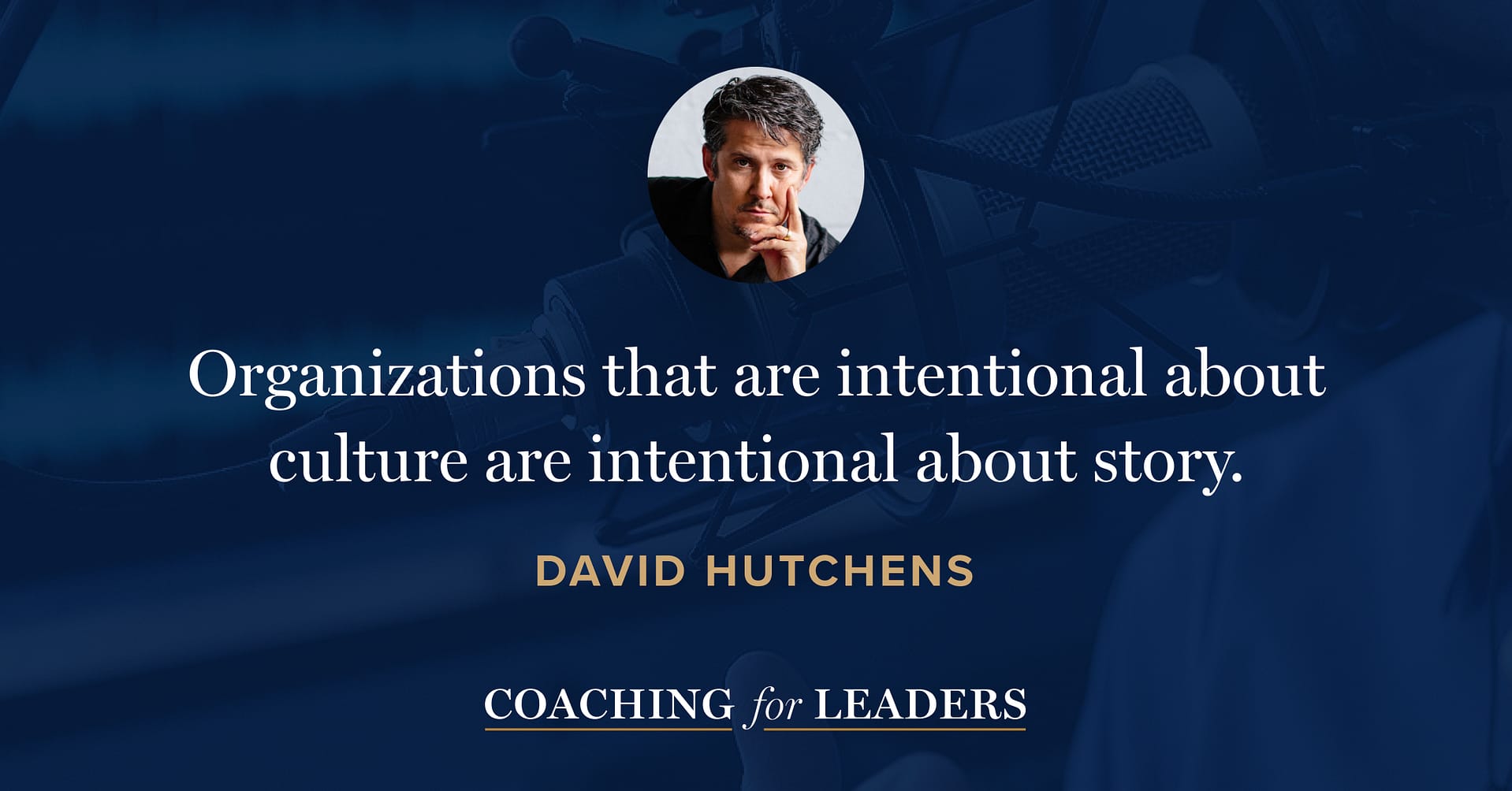
Organizations that are intentional about culture are intentional about story.
https://media.blubrry.com/coaching_for_leaders/content.blubrry.com/coaching_for_leaders/CFL755.mp3

Podcast: Download

Follow:
Apple PodcastsYouTube PodcastsSpotifyOvercastPocketcasts

David Hutchens: Story Dash

David Hutchens works with leaders around the world to find, craft, and tell their most urgent stories for the purpose of creating shared meaning, preserving culture, disseminating learning, and speeding change in organizations. He has taught the Storytelling Leader program at some of the most influential organizations, including NASA, Paypal, Loreal Paris, Cisco, Walmart, Google, and FedEx. He’s written many books, including the Circle of the 9 Muses, Story Dash, and The Leadership Story Deck.

When organizational change is happening, leaders need to be intentional about lining up with culture, especially if it’s the time to shift that culture just a bit. We often do the logistics well, but we miss the power of both the human and emotional connections. In this episode, David and I discuss how story can help us make a meaningful shift.

Key Points

  • The organizations that are being intentional about culture are also being intentional about story.
  • Getting beyond the logistics of changes and leaning first into humanity and emotion help people frame cultural shifts.
  • Leaders go first. Embodied stories from leaders are surprising, counter-cultural, and repeatable.
  • Asking for stories is rarely sufficient. Instead, invite stories through intentional prompts like, “Tell me about a time you felt more engaged, alive, and happiest in your work here.”
  • Received stories are the ones told by employees. Adding an emotion word to an invitation such as, “What’s a time you were proud?” often surfaces more genuine stories.

David is now a Coaching for Leaders expert partner. Connect with him to discover how he might support your organization in making a meaningful cultural shift via our partners page or email him directly at david@davidhutchens.com.

Resources Mentioned

  • Circle of the 9 Muses: A Storytelling Field Guide for Innovators and Meaning Makers by David Hutchens (Amazon, Bookshop)*
  • Story Dash: Find, Develop, and Activate Your Most Valuable Business Stories…In Just a Few Hours by David Hutchens (Amazon)*
  • Leadership Story Deck by David Hutchens (Amazon)*

Related Episodes

  • Leadership Means You Go First, with Keith Ferrazzi (episode 488)
  • How to Start Finding Useful Stories, with David Hutchens (episode 593)
  • How to Bring Out the Best in People, with Donna Hicks (episode 724)

Discover More

Activate your free membership for full access to the entire library of interviews since 2011, searchable by topic. To accelerate your learning, uncover more inside Coaching for Leaders Plus.
How to Lead a Meaningful Cultural Shift, with David Hutchens

Download

Dave Stachowiak [00:00:00]:
When organizational change is happening, leaders need to be intentional about lining up with the culture, especially if it’s the time to shift that culture just a bit. We often do the logistics well, but we miss the power of both the human and emotional connections. In this episode, how story can help us make a meaningful shift. This is Coaching for Leaders, episode 755. Production Credit: Produced by Innovate Learning, maximizing human potential. Greetings to you from Orange County, California. This is Coaching for Leaders and I’m your host, Dave Stachowiak. Leaders aren’t born, they’re made.

Dave Stachowiak [00:00:47]:
And this weekly show helps you discover leadership wisdom through insightful conversations. And one of the things that leaders are navigating often, and perhaps today more than ever, is how to handle change and culture shift in an organization. Organizational transitions have a tendency to be very disruptive and leaders have a lot they can do that makes this go better or unfortunately in some case makes it go worse. How we frame those transitions, those cultural shifts, and makes a huge difference in how we can help the organization to thrive or not. Today, I’m so glad to welcome back a guest expert who’s so wonderful at helping us to look at the human aspects of leadership through the power of story. I’m so pleased to welcome back David Hutchins to the show. David works with leaders around the world to find, craft and tell their most urgent stories for the purpose of creating shared meaning, preserving culture, disseminating learning, and speeding change in organizations. He has taught the storytelling leader program at some of the most influential organizations, including NASA, PayPal, L’, Oreal, Cisco, Walmart, Google, and FedEx.

Dave Stachowiak [00:02:03]:
He’s also written many books, including the Circle of the Nine Muses, Story Dash, and one of my favorite resources, the Leadership Story Deck. David, it is always a pleasure to have you on. Welcome back.

David Hutchens [00:02:14]:
It is always a pleasure. Is this time number seven?

Dave Stachowiak [00:02:19]:
Something like that.

David Hutchens [00:02:20]:
This is the dumb joke I make every time. Do I get my seven timer jacket this time?

Dave Stachowiak [00:02:26]:
There’s a tote bag or something like that in your future. If we had Coaching for Leaders tote bags, I have to be careful about joking about that because I once joked about that and someone reached out and said, where’s the tote bag on your website? Well, there isn’t a tote bag. No.

David Hutchens [00:02:40]:
You only get it if you appear seven times.

Dave Stachowiak [00:02:43]:
I guess so. I guess so. We’ll see what shows up in your mailbox afterwards. So, welcome back. Always a pleasure to talk to you.

David Hutchens [00:02:50]:
Indeed.

Dave Stachowiak [00:02:51]:
I was thinking about our conversation and just so much of what I am hearing from leaders right now. And one of the things that I’m hearing a lot is, hey, change everywhere. Change in how we’re thinking about AI, change in geopolitics, change in the economy. And a big part of leadership is always, but is becoming even more, how to adapt to change and culture shifts and how to lead people through those transitions. And got me thinking of some of the changes I’d been through in my career. And, you know, you and I are big on story, and so I thought it might be fun maybe just to look back at some of those situations and. And see if that paints a picture for us and where we can go and.

Dave Stachowiak [00:03:37]:
And be a little bit better with this if. If that. If that lands with you.

David Hutchens [00:03:41]:
Okay, Dave, when you tell stories, it’s always a highlight of the podcast, so go for it. Bring it on.

Dave Stachowiak [00:03:47]:
Okay, so I was thinking about us having this conversation today, and I got to thinking recently about what are the times that happened in my career where something showed up and really changed something in a substantial way. And I can remember two times earlier in my career where I showed up for work and everything had changed overnight. In one case, I showed up for work one day and the organization had sold overnight, and a huge change. Anyone who’s been through that knows that that is a massive change for an organization and for all the people working in the organization. And we showed up and there was a big meeting and the change got announced, and the entire experience. David. I was an hour or two of this whole process of talking through the change and what was going to happen. And the thing that was really interesting is there was never really a why talked about.

Dave Stachowiak [00:04:51]:
There was no context for why this change should happen, what it really means. And the entire framework of the conversation that day was around the logistics, the paperwork, who was going to report to who, how this was going to change, what people’s titles were going to be, what wasn’t going to change. All the kind of logistical stuff, which, by the way, is important, however, without the why and the larger story behind, sort of left us all thinking, well, what does this mean? And I very distinctly remember having a call with one of my colleagues later that night. Like, after this at all happened, we got on the phone, we both sort of had this reaction, like, what on earth just happened? We knew logistically what had happened because it was super clear. But the why, the meaning behind it was entirely lost on us. And it took us many, many months to sort of piece together from different people, both people who had left, people who were incoming the ownership change, like why this, why this even happened, and. And it sort of set the tone for confusion and not a lot of transparency and things didn’t go great after that. And I think part of that was because that.

Dave Stachowiak [00:06:11]:
That why wasn’t conveyed during that time. Now, in contrast, the other time, I was thinking of where I showed up for work, and there had also been a huge structural change in the organization. And in some ways, this one was even like, while there wasn’t an ownership change, it was even more personal in that all of us on this team had worked for this beloved person in the organization. I think every company has someone like this. This person was like the number one employee that got hired by the founder. Initially when the company had started, he was just revered in the organization. We all loved him. We all thought he was an amazing coach.

Dave Stachowiak [00:06:53]:
He was just an incredible human being, an incredible manager. And all of a sud. We found out he wasn’t going to be our manager anymore. And the person who came in and was taking over his role smartly recognized that this was not going to be news that anyone was going to be really happy about coming into work that morning. And I remember he sat us all down. I can still remember what the weather was like that morning and the windows and all that. I remember us all getting in this big room and he sat us down and he said, have you ever been on a flight on an airplane and you thought you were going somewhere? Maybe you were taking a flight to London and you were so excited about getting to land in London and going on the tour of the Tower of London and getting to see the Crown Jewels and going to walk by Buckingham palace, and you had had your whole itinerary set and you were excited about seeing the shows at the West End and all the things you do in London and. And you get on the plane and near the end of the flight, the pilot comes on and says, we’ve had a mechanical issue and we can’t land in London.

Dave Stachowiak [00:08:00]:
We’re actually going to be diverting to Stockholm. And instead you land in Stockholm. And he said, initially, you’re going to be really, really disappointed because you had your whole plan set out for what you were going to do in London, but you realize after you land in Stockholm that Stockholm is actually a really interesting place too. And he told this whole story, David, and he even had. I think he had a book with him or he had charts and slides of beautiful places in Stockholm. And he walked through this whole, like, what it would be like to just show up in Stockholm unexpectedly and have this beautiful experience. And there was nothing about logistics in the conversation at all. All it was was a conversation about landing somewhere you didn’t expect and what that experience might look like.

Dave Stachowiak [00:08:54]:
And, boy, I’ll tell you, David, we refer to Stockholm so many times in the year after that. And the transition went really smoothly. We were all disappointed that we didn’t get to work for the cool guy. We had worked for all those, all that time before. But it ended up being a really smooth transition for the organization. And I think the story that he showed up with that morning set the tone for what that sounded like for us going forward.

David Hutchens [00:09:23]:
Bravo, Bravo. I and your listeners are all applauding right now. Wow, that’s lovely. And so you’ve got these two stories here, and I feel the different emotional energy of each of them, because the first one, as you’re telling it, I was feeling kind of cold, which is the point. It was a cold experience. And then the second one, I can feel the leader attending to the humanity and to the emotional energies in the room. And I pick that up as a listener.

David Hutchens [00:09:55]:
So those stories feel very different. And I have a. I have kind of a different angle on this because, you know, we’re talking about how do these leaders manage change by telling stories. And we’ve had entire conversations about this before. Right. Today, what we’re talking about is the connection between story and culture and identity. So I’m going to come into your story through a side door, and I’m going to make a prediction here because you told two stories about two different organizations. And obviously I’m not going to ask you to name the organizations, but my prediction is that the stories that you told about these two different places represent the culture more broadly at each of the places.

David Hutchens [00:10:46]:
Is there some truth to that prediction?

Dave Stachowiak [00:10:48]:
Oh, absolutely. And that truth played out in the months and year afterwards of the story, or lack thereof in the first case, really not only set the tone for what would happen next, but also connected back to the cultural elements that were true for each organization. In one organization, the one that was the more positive example, that there was an element of, okay, we’re changing, we’re growing, we’re always trying new things. And so, like, that leader really latched onto those cultural aspects through that story. In the other one, it was more like, well, you know, we just handle things logistically when they come up. There wasn’t necessarily that human cultural aspect of it.

David Hutchens [00:11:34]:
Identity is story, culture is story. If we’re doing identity work or culture Work. We can’t do that without telling stories. I actually think it’s impossible. You’ve told these two stories and there’s an element of story that is fractal. The thing that is true at a smaller scale is also true at a broader scale. You tell these two different stories of two different organizations. Now, I know a lot just from your three minute stories.

David Hutchens [00:12:08]:
I know a lot about the cultures of both organizations. Stories are fractal. And my guess is that that first leader wasn’t thinking about the identity of the organization, he was just reacting. And the second leader, it sounds like he was being really intentional and recognizing that how he shows up in this moment has an impact on who we are collectively in our identity, in our culture. And so that’s the conversation I want to explore today. Is this intentionality of how are we embodying and telling stories that will create the identity and the culture that is important to us.

Dave Stachowiak [00:12:46]:
You have shared with me that the organizations that are being intentional about culture are also being intentional about story. That there’s a strong connection between those two.

David Hutchens [00:12:58]:
You can’t separate it. And so today in this work that I do of telling stories, when we look at outcomes, managing a change, introducing a new innovation, becoming a knowledge sharing, a learning organization, there’s still a lot of interest in that. Right now, identity and culture is becoming really urgent. I’m getting more conversations right now around who are we? What does it mean to be us? How are we going to show up intentionally in this crazy fast changing environment that we’re in? Story for culture and identity is the fastest growing part of my work right now.

Dave Stachowiak [00:13:36]:
It’s one of the reasons I wanted to talk with you because of all the change happening in the world and you are in the middle of it, of helping organizations navigate this and doing even more of this than you’ve done before. And as you reflect on some of the things you have seen that really have have excited you that organizations are doing with story. Like what are some of the examples that are coming up of how leaders are using story in order to be really intentional of connecting with culture and identity?

David Hutchens [00:14:06]:
Okay, well, I’ve got a story for you.

Dave Stachowiak [00:14:10]:
I am not surprised.

David Hutchens [00:14:13]:
So an organization that I’ve been watching closely because they’re doing some really interesting things right now in terms of intentional culture and connecting story to that is Chewy. And if you’re a pet owner, you may know Chewy, it’s an online pet food and pet medication company. You can order pet food in your meds online through chewy.com and, and they’re doing some really interesting things similar to what Zappos was doing quite a few years ago when they started getting a lot of attention for their culture work. And also Southwest Airlines, similar to those cultures, they’re being really smart about bringing certain kinds of stories forward and telling them internally to build identity and also externally to build brand and marketplace voice. And they’ve got some good ones. So I’m going to share one with you that I found online. I’m just going to read this to you, please. So this isn’t me telling the story.

David Hutchens [00:15:12]:
I’m just going to read how they tell the story. So listen to this and tell me what you notice about this. So this is chewy.com Sherry Flanagan spent the holidays trying to process her grief over the Dec. 22 death of her beloved dog, Zoe. Well, little did Sherry know that her heartbreak would double on January 30th when Thor, her 15 year old cat, also died. Losing Zoe was terrible. We had her for 10 years, Flanagan said. But when Thor died, that was crushing.

David Hutchens [00:15:48]:
He was always my number one boy. I’m tearing up just talking about it. Well, Flanagan wanted to return the unopened food she had purchased for Thor from Chewy, and so she called Chewy for a refund. When she called, she talked to Ashley, one of our customer service representatives, and Flanagan did not intend to pour her heart out, but Ashley prompted her to share her grief. Ashley was amazing, said Flanagan. She told me she had a cat put down and she really understood. And I kept saying that I didn’t mean to bother her and she kept saying, no, this is important. Tell me more.

David Hutchens [00:16:31]:
Well, not only did the Flanagans get a full refund for their purchase, but on February 8, a florist van pulled up to the Flanagan home and delivered a large bouquet and a note expressing condolences over the deaths. When the story went viral, our VP of customer service said to People magazine, we don’t feel like we’re talking to customers. We’re talking to pets, parents. We’re feeding their children. We are part of their families. So that’s one of the stories that Chewy is telling. They’re being really intentional at making sure these stories are coming forward again, not just to their marketplace, but internally as well. And here’s what’s interesting about this.

David Hutchens [00:17:18]:
There’s something very intentional happening here. As Chewy brings these stories forward, they’re doing something really specific. Sometimes when I share stories like this, I remember I once shared a Southwest Airlines story and a colleague said, oh, Cool stuff happens in that culture all the time. If I had cool stuff like that happening, I could tell stories like that as well. And I said, I think you’ve got it backwards. I think it’s the other way around. The reason cool stuff like this is happening at Southwest or at Zappos or at Chewy is because they’re telling the stories. And when we look at the neuroscience of stories, you and I have talked about this in some of our other podcasts.

David Hutchens [00:18:06]:
If that story worked for you when I was talking about Thor and Zoe passing away, if you felt something in your body, if you felt some emotion, the science says that we were connecting in a really powerful way. Our brains were connecting as I was telling the story. There’s a neural entrainment that happens. Some call it neural coupling, if you’ve heard about mirror neurons. So at some level, stories act like simulations. As you’re listening to me tell that story, if it works, if you like it, at some level, that was you having those experiences. You were experiencing the loss, and you were also experiencing that moment of leadership from that customer service representative who said, I’m going to do something to help this family. And now, because of the neural coupling and the emotional content, you hold that behavior in your body almost like a muscle memory, almost like you did it.

David Hutchens [00:19:03]:
Even though you didn’t, you hold the behavior in your body. And so now as we tell these stories and we have to tell them intentionally and repeatedly, you know, repetition is important. As we tell these stories, we’ll start to see the behaviors in the story emerge across the system. It’s really powerful. David Cooperrider is a theorist who talks about this. He calls it the anticipatory principle. The anticipatory principle. Organizational systems move in the direction of the stories that we continually place in front of them.

David Hutchens [00:19:37]:
And so my message to your listeners is, when you’re thinking about culture and identity, here’s a pro tip for you. For leaders who are saying, I don’t know which stories to tell, what are the behaviors you wish you would see more of within the system? Tell stories that have those behaviors in them, and then keep telling them and watch what happens. You’ll see those behaviors emerge, and you’ll see the culture start to move.

Dave Stachowiak [00:20:03]:
This is a beautiful lead in to two of the things that you think about a lot when you’re helping organizations to do this more intentionally and helping leaders to do this more intentionally. Two different kinds of stories, what you call embodied stories and received stories. And I’m wondering if you could paint the Picture of what those two different kinds of stories are, and then maybe we could look at an example or two of how they show up.

David Hutchens [00:20:32]:
So when we’re talking about intentional culture work, it’s not just a matter of telling stories. If you look at the theory of culture change and how identities shift and what actually works, it is these two different types of stories. The embodied story, as you just said, and the received story. So the embodied story points to the idea that if we’re looking at culture change that works, leaders go first. And it’s not only that we tell the story, but first you have to live the story. You have to do something storied that becomes a story that people tell. So I’ll give you an example. I’ve gotten to be really good friends with the leaders over at the WD40 company.

David Hutchens [00:21:16]:
They’ve been doing some really intentional things with culture, really innovative work. Their previous CEO, Gary Ridge, is one of the modern legends now. And he was really good at this, at creating culture by adopting these countercultural behaviors that he knew would become identity setting stories. So for example, one thing he did that sent a shockwave through the system was one year as CEO, he received while he was there, 360 degree feedback from his peers, just like everybody else in the organization. Well, Gary took his feedback and he posted it online internally so that every employee could see his feedback, including his flaws and his critiques. His team criticized him for some of his behaviors. And Gary said, everybody gets to see this. And his quote was, “if I expect you to grow, I have to be willing to grow as well.”

David Hutchens [00:22:22]:
Well, imagine the buzz that created across the organization. You can almost hear the ripple effects, the conversations. Did you see what Gary did? Oh my gosh. If we jump to the end of the story. Under Gary Ridge’s leadership, WD40’s engagement scores, employee engagement scores were among the highest in the world. So this company that makes industrial lubricant, WD40, had some of the highest employee engagement in the world. Gary Ridge was really intentional about living these culture defining behaviors that would become stories that would spread across the system.

Dave Stachowiak [00:23:05]:
The three words that leap out at me in what you said are these leaders go first. Like him setting the tone by beginning and starting and saying, hey, if I expect you to learn and to grow, I better set the tone at the top. And I think back to the all those years earlier of that Stockholm story that the leaders showed up with, right? Like if no one else shows up with a story in a situation like that, where there’s a Huge transition. A story is going to be told, but it’s going to be like, who knows what the story is going to be told. But if the leader shows up and sets the tone for the story and sets the example first and goes first, then they shape the narrative. And then they have the opportunity to not only latch onto the cultural aspects that were already there, but also to move the culture and identity forward into the next season of whatever the next season looks like.

David Hutchens [00:24:06]:
That’s it. It’s the aspect of the story skill that I don’t hear people talking about enough. There are the stories we tell, but that’s why I call it the embodied story. It’s the story that you live first. In the research that I’ve looked at on successful and unsuccessful culture changes, I remember one researcher’s comment was, we did not explore or review a single culture change, successful one that began with an announcement that we are doing a culture change. In other words, announcing we’re doing a culture change. One researcher said, there’s no correlation at all to the culture change being successful. You may as well not even announce that you’re doing it.

David Hutchens [00:24:50]:
Instead, what you do is you create these culture or countercultural behaviors and then intentionally make sure that those stories are brought forward. When I think of the embodied stories, the ones that define culture, I think of three capabilities or three characteristics. The stories need to be surprising, they need to be countercultural, and then they need to be repeatable. So we see that with Gary Ridge. Surprising. Ooh, that’s different. That stands out. We never done that before.

David Hutchens [00:25:24]:
Countercultural things have been pretty rough around here. Wow, that feels a lot different. That goes against what we’re doing. And then repeatable, kind of like we just talked about. Stories are simulate simulations. Right. We feel that in our bodies. And then we say, I could show up with that kind of vulnerability in revealing my own learning journey.

David Hutchens [00:25:46]:
Oh, if it’s safe for the CEO, I can see what that looks like in my work as well. And so again, we start, we bring those stories forward and then we start seeing the behaviors emerge across the system.

Dave Stachowiak [00:25:58]:
Hmm, Beautiful. I love it. What’s different between what you just described, that embodied story, and the received story? The other part.

David Hutchens [00:26:09]:
So I said that leaders go first, but that’s not the end of the process. And there’s kind of a top down, grassroots up model for culture change through story. So we’ve got the leader stories, we bring those forward. Kind of like at Chewy, kind of like at WD40, people are shaking their heads and going, oh, so it looks like that. Oh, I can see what that looks like in my work. Well, now we have an opportunity because there are stories in the system that you have not heard. You would be amazed some of the stories in your system that you have not heard. And one thing I see groups do sometimes, Dave, and the results are always disappointing.

David Hutchens [00:26:50]:
They’ll send out a message, oh, we’re looking for great stories. Send us your story. Send us an email with your stories. It almost never works because people don’t know what you mean by a story. They don’t know what good looks like. And you get a lot of noise, you get a lot of junk. People are always disappointed. You don’t get the stories that you’re looking for.

David Hutchens [00:27:15]:
So when I work with groups, we’ll create these occasions. We’ll bring the employees together. We’re here to talk to each other in a different kind of way. We want to hear your voice, we want to hear your experiences. And so we’ll do classic story circles. Sit in a circle. Groups of four, groups of five. Tell me about a time when.

David Hutchens [00:27:37]:
And of course you design the prompt for the kind of culture building stories that you want. I’ll often go with values and action stories. We’ve got the statement of values. Okay, we care about quality, we care about excellence. Sounds like corporates speak words on a website. What does that look like to you? Tell me about a time you or a team member embodied the value, excellence or whatever in a way that inspired you. Or maybe it’s chewy. Tell me about a time a team member served a customer in a way that really inspired you.

David Hutchens [00:28:12]:
What happened? And then step back and let people talk to each other. We’re in groups of four. So there’s that social aspect to it. Now we’re not capturing data on an email now we’re just talking to each other about things we care about, that we’re excited about. And these beautiful stories start coming forward. So those are the received stories, the leaders tell stories. Here’s what we think is important. And then step two is, but tell us what that looks like to you.

David Hutchens [00:28:41]:
And the stories that come in are the ones that say, here’s who we really are, here’s what it looks like. And we begin capturing and curating those stories. Now not only do we have this bank of stories that define who we are, we’re building the capability across the team for people to engage with each other in this more human, beautiful, emotional, storied way.

Dave Stachowiak [00:29:05]:
I must be thinking in threes today because there’s three Other words that showed up at what you just said, that really just, I think is so profound. And you said as part of that prompt of what you say to people, what’s a time? And I think about that prompt of, what’s the time? What’s the time this happened? What’s the time that excellence showed up in your work? What’s a time where a customer situation really went so beautifully? Like, you’re thinking through that prompt and you’re assuming that those stories are there, because they are. And whenever I ask a question like that to someone, especially when we’re talking about struggles, anytime someone articulates to me a struggle that they’re having as a leader of, like, hey, I’m dealing with this. I’m having a hard time giving feedback, or I. I’m running into situations with not delegating well, I will often find myself asking, what’s a time that happened? Ask them to share a story, because once they share the story, then it really makes sense. I can understand, like, what do they mean? What specifically are they running into? And there’s almost always a positive side of that, too. Like just by asking a what’s a time? What’s an example? People almost always have something to say. In fact, they almost always have many things that they could say if you ask the question and there’s a prompt there for it.

David Hutchens [00:30:27]:
I love that you’re calling out the language, because inviting stories is really sensitive to language. When I’m inviting stories, I spend a lot of time looking at the word choice. And you’re right, an important part of it is that tell me about a time language. If you just say, we’re looking for stories of the values, you’re not going to get really good stuff. The other thing. Here’s one of my other little secret pro tips. When I’m asking for stories, I try to put an emotion word in there. So it’s not just tell me about a time that you saw the values in action.

David Hutchens [00:31:00]:
It’s tell me about a time you are proud of the way the value showed up. Well, as soon as you say that emotion word. Oh, a time I was proud. Hmm. Now I’m searching my memories in a different way. I’ve evoked that emotion in the body. Proud. I know what that feels like.

David Hutchens [00:31:17]:
When did I feel that way? And by putting an emotion word in there, you get these more emotional, inspiring human stories.

Dave Stachowiak [00:31:27]:
David, as always, this is so helpful. Okay, two things that I’d like to say here at the end. First of all, folks who listen to the podcast regularly will know that we started an expert partner program earlier this year and when we did, David was the first person I called and said I’d like you to be part of this program because of not only what you teach in the importance of it, but perhaps even more importantly, the number of people in our community who have reached out to me over the years and said how helpful you’ve been either through your resources or in coming into their organizations and helping them to really utilize story. Not just for story sake, but to do to make big shifts and changes and help the organization to navigate through sometimes difficult times and to find their voice. And so if this conversation has gotten gotten you thinking, hey, we need to do more of this as an organization, as a team, of having someone like David come in and actually do more of this work intentionally and to have to set up those prompts for being able to have stories emerge in really intentional ways. I hope that you’ll reach out either to David directly. We’re going to put his email in the episode notes, or you can reach out through our partners page at coachingforleaders.com/partners. And David’s always super gracious when folks reach out of seeing if there’s something that he can provide as far as a resource or content or perhaps a conversation about how he can help more intentionally.

Dave Stachowiak [00:32:53]:
So I hope that you’ll take the invitation to do that again. Go to coachingforleaders.com/partners the second thing that I’m thinking of, David, is of course the question I often ask, which is what you’ve changed your mind on in the last year so much, given all the things that are happening and changing the world. As I mentioned up front, so many more leaders are thinking about humanity and culture and all the shifts and changes and bringing that into their work. And as you have worked with organizations and seen people struggling with this and also having great successes with it, I’m wondering what you’ve changed your mind on or that you’re seeing now that has really informed you.

David Hutchens [00:33:36]:
I’ve changed my mind about scale. And by that I mean my work’s organizational learning. My work is leadership development. And often that looks like working with a team or with a room of 24 leaders at a time. And what I’m thinking about now is instead of this being an individual skill, skill building at a team level, what does it look like to scale this most human voice all across a system or an enterprise? Right now the fastest growing part of my work is licensing and certification and how do we bring this capability not to a Team of four. What would happen if we invited this different kind of conversation with 5,000 people? And I’m working with several organizations right now to bring this different kind of conversation forward. And I’m discovering that the opportunity for impact and for change is really tremendous. It’s a totally different way of thinking about the work that I do and it’s really exciting.

Dave Stachowiak [00:34:43]:
I am not surprised at all that you are having success at scaling what you’ve done because it’s been so helpful to so many of us. Thank you so much for all the resources you provide through the books, through the kindness of your time with folks and of course, most importantly of your time to share your work with us. Always a pleasure, David. Thanks.

David Hutchens [00:35:03]:
Always a pleasure. I’m going to run to my mailbox and look for my jacket.

Dave Stachowiak [00:35:09]:
Have a good one.

David Hutchens [00:35:10]:
Thank you.

Dave Stachowiak [00:35:17]:
If this conversation was helpful to you, three related episodes I’d recommend. One of them is episode 488, leadership means you go first. Keith Ferrazi was my guest on that episode. Best selling author of many leadership books including Never Eat Alone, which I read I think 25 years ago when I first came across his work. And in that conversation we talk about that message. Leadership means you go first. We expand upon that quite a bit in that conversation and the bravery and courage that we all need. But ultimately it does mean that we take the first step.

Dave Stachowiak [00:35:48]:
Episode 488, if you’re looking for some inspiration there also recommended episode 593, how to start finding useful stories. It’s one of the past conversations David and I had together. In that conversation we looked a little bit more through the lens of if you’re trying to find your own stories that you might tell more inside the organization and how you go about the process of doing that. We talked a bit about how to do that with the organization today. A little bit more of the personal perspective on episode 593. I think it’s a great compliment to this conversation. And then finally I’d recommend the episode with Donna Hicks, Episode 724 how to Bring out the best in people. Anytime we’re talking about change, leadership, culture, hopefully bringing out the best in people is at the center of that conversation.

Dave Stachowiak [00:36:34]:
Don and I talk about dignity as a key aspect of that and how we can really align our cultures in a way that bring out the best in others. Episode 724 Some Great Tactical things on how to do that, but also some wonderful inspiration from Donna on where to begin. All of those episodes, of course you can find on the coachingforleaders.com website. One of the other things you can find on the website is our Partners page. One of the great privileges I’ve had in airing this podcast since 2011 is meeting so many wonderful experts out there who doing incredible work in the world like David and so many others. Now number of them we’ve partnered with because of their tremendous work and their service to so many folks inside of our listening community. And if you are seeking a coach or a facilitator or speaker right now, or an expert partner that can help you think through the framework of what they have done and to be helpful to something you’re navigating in your organization right now, our Partners page is a great place to begin. Just go over to coachingforleaders.com/partners, tell us a little bit about what you are thinking about right now where you think you need some help and I’ll drop a line to you and let you know how I think.

Dave Stachowiak [00:37:50]:
If anything we can do to be supportive of you or to make the right connection for you inside of the Coaching for Leaders network. Again, that’s at coachingforleaders.com/partners. Coaching for Leaders is edited by Andrew Kroeger. Production support is provided by Sierra Priest. Next Monday I’m glad to welcome back Muriel Wilkins to the podcast. She is the host of the Coaching Real Leaders podcast that’s put out by Harvard Business Review. Muriel is returning with a new book and we’re going to be exploring what to do when you show up in a big leadership role and it’s kind of feeling like you don’t belong. That conversation with Muriel next week.

Dave Stachowiak [00:38:34]:
Have a great, great week and see you back on Monday.

Topic Areas:Organizational ChangeOrganizational CultureStorytelling
cover-art

Coaching for Leaders Podcast

This Monday show helps you discover leadership wisdom through insightful conversations. Independently produced weekly since 2011, Dave Stachowiak brings perspective from a thriving, global leadership academy of managers, executives, and business owners, plus more than 15 years of leadership at Dale Carnegie.

Listen Now OnApple Podcasts
  • More Options
    • YouTube Podcasts
    • Spotify
    • Overcast

Activate Your Free Membership Today

Access our entire library of Coaching for Leaders episodes from 2011, searchable by topic.
Listen to the exclusive Coaching for Leaders MemberCast with bonus content available only to members.
Start Dave’s free audio course, 10 Ways to Empower the People You Lead.
Download our weekly leadership guide, including podcast notes and advice from our expert guests.

... and much more inside the membership!

Activate Your Free Membership
IMAGE
Copyright © 2025 · Innovate Learning, LLC
  • Plus Membership
  • Academy
  • About
  • Contact
  • Dashboard
×

Log in


Forgot Password

Not yet a member?

Activate your free membership today.

Register For Free
×

Register for Free Membership

Access our entire library of Coaching for Leaders episodes from 2011, searchable by topic.
Listen to the exclusive Coaching for Leaders MemberCast with bonus content available only to members.
Start Dave’s free audio course, 10 Ways to Empower the People You Lead.
Download our weekly leadership guide, including podcast notes and advice from our expert guests.

... and much more inside the membership!

Price:
Free
First Name Required
Last Name Required
Invalid Username
Invalid Email
Invalid Password
Password Confirmation Doesn't Match
Password Strength  Password must be "Medium" or stronger
 
Loading... Please fix the errors above